
Chat Now on WhatsAppChat on WhatsApp with PouffeLOVE (+353 86 792 1662)
Explore Our Storage Bench Collection
Handcrafted Benches in Galway — Custom, Built to Last
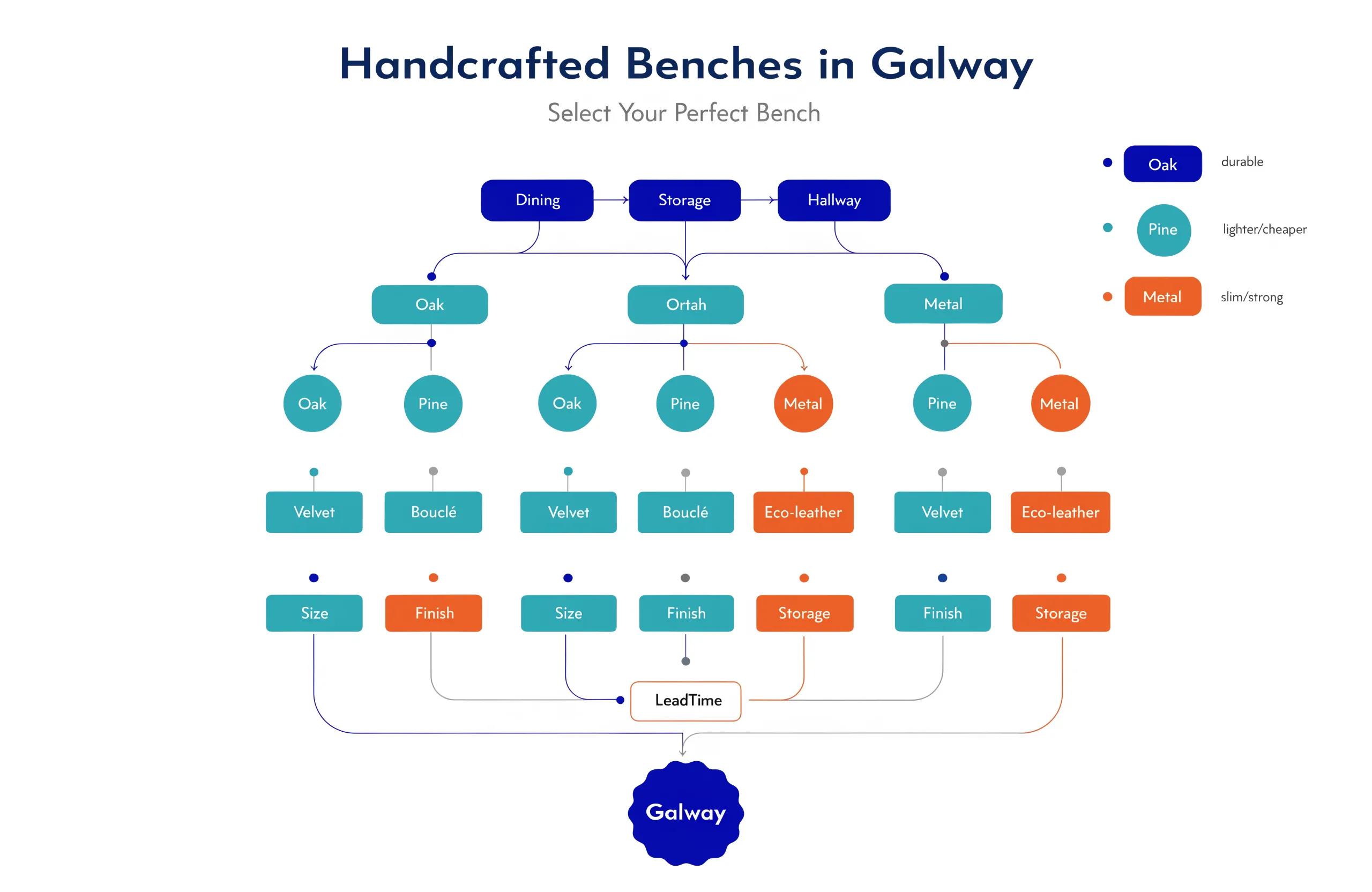
Custom handcrafted benches for Galway homes
Handcrafted benches pair robust materials, considered joinery and bespoke finishes to create seating that suits a home’s style and everyday needs. Galway shoppers will find pieces made to local tastes and conditions. This guide explains what makes a bench handcrafted, why choosing a locally made piece in Galway improves longevity and visual harmony, and how to compare dining, storage and entryway benches before you buy. You’ll learn the practical benefits—like made-to-measure sizing and repairability—the trade-offs between solid oak, softwoods and metal frames, and how upholstery choices such as velvet or eco�leather affect comfort and upkeep. We also cover customisation steps, a clear comparison of common bench types, and how a specialist online retailer supports Galway customers. Relevant search terms like handcrafted benches Galway, storage benches Galway and dining benches Galway are used to help you find the right bench for your home.
Key Takeaways
- Handcrafted benches in Galway offer superior durability through skilled joinery and high-quality materials.
- Local craftsmanship ensures bespoke sizing, faster communication, and finishes suited to Galway019;s climate.
- Dining, storage, and hallway benches each serve distinct functions and require specific design considerations.
- Material choices like solid oak, softwoods, and metal frames impact bench longevity, aesthetics, and maintenance.
- Upholstery options such as velvet, boucl�e9, and eco-leather balance comfort, style, and ease of cleaning.
- Customization includes dimensions, materials, upholstery, and storage features tailored to individual home needs.
- Ordering involves measurement submission, sample approval, deposit payment, and artisan-led production with variable lead times.
- Sustainability trends favor reclaimed timber, certified wood, and multifunctional designs to reduce environmental impact.
- Proper maintenance and careful measurement ensure long-lasting use and perfect fit of handcrafted benches.
Why Choose Handcrafted Benches in Galway?
A handcrafted bench is made and finished by skilled makers using traditional joinery and quality materials, which gives greater durability and finer detail than most mass-produced seating. That durability comes from careful material selection and hand-finishing, which minimise weak points and create surfaces that age gracefully, delivering lasting value. Choosing a locally made bench in Galway also makes bespoke sizing and finish matching straightforward, and traceable sourcing often improves sustainability. Local production shortens communication between maker and buyer, speeding custom approvals and aftercare for Galway households. These advantages appeal to buyers who value longevity, distinctive design and responsible sourcing.
Below we outline the core buyer benefits, then show how a Galway-focused retailer supports those priorities.
- Durability and repairability: Hand-joined frames withstand daily use and can be repaired rather than discarded.
- Bespoke fit: Custom sizes ensure the bench suits awkward alcoves, table pairings or hallway layouts precisely.
- Unique aesthetics: Hand-applied finishes and matched timber grain create one-of-a-kind character.
What Are the Benefits of Handcrafted Benches?
Handcrafted benches last because makers use stronger joinery and higher-grade timber, which reduces structural failure and extends usable life. That longevity means a well-made bench is easier to maintain, reupholster and keep in service for years—reducing waste compared with disposable furniture. Each handcrafted piece also carries visual uniqueness: grain patterns, hand-finishes and small tool marks give texture and personality. Finally, handcrafted benches often retain resale value better and can be adapted or repaired by local artisans, keeping them useful through design updates and changes in the home.
These points will help you assess bench collections and material choices in the sections that follow.
How Does Local Galway Craftsmanship Enhance Bench Quality?
Local Galway craftsmanship offers tight quality control: makers oversee everything from timber selection to the final finish, which reduces defects and ensures the result suits Irish interiors and climate. Proximity shortens feedback loops—adjustments, sample approvals and aftercare are quicker and more effective. Local workshops also tend to favour traceable sourcing and traditional techniques, so benches reflect regional taste while meeting durability expectations. For Galway customers, this means a more collaborative purchase experience, with options for tailored delivery and advice on caring for finishes in local conditions.
This local advantage leads naturally into a look at bench collections for different rooms and uses.
Explore Our Handcrafted Bench Collections in Galway
Collections are usually organised by primary use�d4dining, storage, hallway/entryway�and by construction: upholstered, solid-wood or metal-framed benches for different interiors and load requirements. Each collection highlights function and finish: dining benches focus on seating comfort and table pairing, storage benches balance capacity and aesthetics, and hallway benches prioritise compact depth and hard�wearing upholstery.
Different bench types suit different rooms and practical needs:
This comparison clarifies how bench types match room function and ordering expectations, helping buyers narrow choices before they consider materials and finishes.
- Dining benches: stable, longer frames and heights matched to tables; ideal for families or communal meals.
- Storage benches: lift-up seats, internal compartments or drawers that hold shoes, blankets or linens.
- Hallway/entryway benches: shallower depth and durable upholstery designed for high-traffic use.
These characteristics guide you toward a bench that balances style with everyday use. Next we look at timber, metal and upholstery options to refine that choice.
What Types of Dining Benches Are Available?
Dining benches range from minimalist solid-wood planks to padded models that add comfort for long meals, and from narrow benches for compact kitchens to longer benches for large family tables. Solid oak highlights grain and durability, while veneered or softwood options are more budget-friendly and lighter in appearance. Upholstered benches add cushioning and fabric choice�velvet or boucl�e9 for a refined look, eco�leather or hard�wearing woven fabrics for easier maintenance. Seating capacity depends on bench length and table pairing; careful measuring prevents leg clashes and keeps dining comfortable.
How Do Storage Benches Combine Functionality and Style?
Storage benches combine seating with internal compartments�common mechanisms include lift-up seats and built-in drawers�offering hidden storage without compromising design. Capacities vary from small cubbies for shoes to roomy voids for blankets; internal layout should match intended contents and weight needs. A storage bench�s finish and upholstery should suit the room while hiding wear; hard�wearing fabrics and sealed timber finishes resist scuffs in entryways. Measure internal depth and seat height to ensure the bench fits your items and the circulation path in your hallway or bedroom.
This quick comparison highlights the trade-offs between seating capacity and functionality to help guide your choice.
Which Materials Are Used in Our Galway Benches?
Bench materials include solid hardwoods, softwoods, reclaimed timber, metal frames and a range of upholstery fabrics�each affects durability, care and the overall look. Solid hardwoods like oak offer strength and rich grain, while softwoods such as pine give a lighter, more casual aesthetic but need careful finishing for durability. Metal frames create a modern, slim profile and high load capacity but require rust�resistant finishes in damp climates. Upholstery choices�velvet for luxury, boucl�e9 for texture, eco�leather for easy cleaning�change hand�feel and maintenance. Knowing the parts of a bench�seat, frame, legs, storage compartment, upholstery�helps you combine components for the desired result.
Before the detailed material table, a short note explains the comparison purpose.
This material comparison makes the trade-offs clear so you can prioritise durability, maintenance or aesthetic when choosing a bench.
Solid oak 122 provides 122 high durability; its tight grain responds well to oil and wax finishes that enhance longevity.
Softwood 122 offers 122 approachable pricing and a lighter look but needs sealed surfaces to resist dents and moisture.
Metal frame 122 delivers 122 structural strength and a slim profile that suits modern interiors, especially paired with upholstered seats for comfort.
These summaries lead into a closer look at hardwood features and upholstery choices in the next sections.
What Are the Features of Solid Oak and Other Woods?
Solid oak is prized for dense grain, impact resistance and its ability to take a wide range of finishes�from natural oils to darker stains�making it ideal for busy dining and hallway benches. Oak can be refinished multiple times, extending its life, while softer woods like pine provide a warmer, rustic look at lower cost but show dents more easily. Reclaimed wood offers patina and sustainability benefits�its character often conceals wear and reduces environmental impact compared with new timber. Choosing between woods means balancing aesthetic preference, expected wear and sourcing priorities such as certified timber.
How Do Upholstery Options Like Velvet and Eco�Leather Enhance Comfort?
Upholstery turns a hard seat into a comfortable, tactile focal point. Velvet gives a plush feel and a luxe look but needs attentive care to avoid crushing and staining. Boucl�e9 adds texture and a contemporary look with reasonable durability, while eco�leather gives a wipe�clean surface suited to busy homes. Fabric choice affects comfort and cleaning routines�removable covers make washing easier, while fixed upholstery benefits from regular vacuuming and spot cleaning. Consider hand�feel, stain performance and visual weight when matching fabric to household use.
How Can You Customize Your Handcrafted Bench in Galway?
Customisation lets you tailor dimensions, material combinations, upholstery, leg styles and storage layouts to fit your space and needs. The process usually starts with measurements and a style brief, followed by material and fabric selection, sample approval and production�lead time varies with complexity. Pricing depends on materials, joinery complexity and upholstery; bespoke finishes and unusual sizes often add to lead time. The table below summarises common custom options so you can scan choices before requesting a quote or sample.
This table outlines what can be customised and how choices affect appearance and function.
To make the process straightforward, follow this stepwise approach that maps to a typical buyer journey and supports featured�snippet intent.
- Choose size and primary material: measure the space and decide on solid wood, metal frame or an upholstered base.
- Select upholstery and finish: order fabric samples and choose a timber finish or metal coating.
- Confirm lead time and delivery: review production estimates, agree a deposit, and schedule delivery or collection.
What Customization Options Does PouffeLOVE Offer?
At PouffeLOVE we specialise in handcrafted furniture and offer a selection of benches suited to Galway homes: upholstered benches, wooden benches and metal�framed benches. We emphasise craftsmanship, variety and customisation, so you can choose materials, finishes and fabrics that match your interior. Our service supports bespoke sizing and aesthetic choices so benches pair cleanly with table heights, hallway depths or storage needs. Start by browsing categories, requesting fabric or finish samples, and sending a custom enquiry for tailored options.
What Is the Process for Ordering a Custom Bench?
Ordering a custom bench typically starts with an enquiry where you share measurements and style preferences, followed by design confirmation that includes sample selection and a detailed quote. Once you approve materials and pay a deposit, production begins under artisan supervision�lead times vary by complexity. Final steps include delivery scheduling and aftercare guidance to preserve finishes and upholstery. To ensure a smooth order, provide accurate measurements, request swatches where available and confirm access and clearance for delivery.
That said, bespoke furniture design and ordering can have challenges, which research has examined in depth.
Bespoke Furniture Design & Ordering Challenges
ABSTRACT: This study examines common difficulties in bespoke furniture projects. Despite improved tools and services, challenges remain�visualising spatial solutions, uncovering hidden requirements and avoiding miscommunication between stakeholders can complicate the process. The research highlights practical steps to improve clarity and reduce friction during custom commissions.
Where to Buy Handcrafted Benches in Galway?
When looking for handcrafted benches in Galway, favour sellers who clearly describe materials, show joinery and finishes, and offer fabric or finish samples. Online retailers and local makers both have strengths: online shops offer wider selection and curated ranges, while local workshops make collaboration and sample approvals easier. For convenience, identify the product category that matches your need�dining, storage or hallway�then request samples or a custom quote before committing. The short checklist below helps Galway buyers move from inspiration to purchase.
- Browse curated collections that suit your room and function.
- Request fabric or finish samples to confirm colour and texture before you order.
- Ask for a custom quote when standard sizes don�t fit your space.
These steps reduce uncertainty and help ensure the finished bench fits your home.
How Does PouffeLOVE Serve Galway Customers?
We operate as an e�commerce retailer specialising in handcrafted furniture and serve Galway and the rest of Ireland with curated benches in upholstered, wooden and metal styles. We focus on handcrafted quality and custom options, enabling Galway shoppers to browse ranges, request samples and make bespoke enquiries online. PouffeLOVE supports customers with guidance on measurements and finishes, making it easier to order and arrange delivery. Our online-first approach brings variety and practical support for custom orders and material selection.
What Are Customer Experiences and Testimonials?
Customer feedback for handcrafted benches commonly highlights build quality, upholstery comfort and the value of made�to�measure sizing when benches are tailored to tables or hallways. Buyers often praise responsiveness during customisation and the longevity of well-finished solid timber after years of use. We recommend checking product reviews and photos to verify fabric performance and finish appearance in real homes before ordering�these accounts help set expectations around delivery timelines and aftercare.
What Are the Latest Trends in Handcrafted Benches for 2025?
Design trends for 2025 emphasise sustainability, heritage craft and multifunctional furniture that fits smaller urban homes while keeping material authenticity and tactile finishes.
Natural tones and textured upholstery�boucl�e9 and muted velvets�are popular, often paired with solid timber bases or slim metal frames to balance warmth and modernity.
Multifunctional benches that combine discreet storage with seating are rising in popularity as households prioritise space efficiency without losing on character.
These trends reflect broader drivers: lifecycle thinking, demand for repairable goods and a return to hand-finished details.
How Do Sustainability and Heritage Craftsmanship Influence Designs?
Sustainability influences bench design through reclaimed timber, certified sources (FSC/PEFC) and low�VOC finishes that extend product life. Heritage craftsmanship contributes techniques like hand�planing and traditional joinery that make parts repairable and reduce waste. Designers blend these approaches to create pieces that celebrate materiality while minimising production waste�resulting in benches that look timeless and meet modern environmental expectations.
Why Are Multifunctional and Stylish Benches Gaining Popularity?
Multifunctional benches solve space constraints by combining storage and seating in compact forms, so homeowners can maximise usable space without sacrificing style. For example, a lift�up storage bench in an entryway keeps shoes and seasonal items out of sight while providing a comfortable seat. Demand for dual�purpose furniture also reflects a desire for longer�lasting investments�pieces that pull double duty justify higher craftsmanship costs. Styling trends now ensure multifunctional pieces act as visual anchors, using textured upholstery or distinctive leg profiles to make a design statement rather than hide functionality.
- Sustainable sourcing: Buyers favour reclaimed or certified timber to reduce environmental impact.
- Multifunctionality: Storage-first designs answer tight-plan living without compromising style.
- Textured upholstery: Boucl�e9 and muted velvet finishes add tactile interest while remaining versatile.
Knowing these trends helps you choose benches that suit both current needs and future tastes.
Frequently Asked Questions
1. How should I maintain my handcrafted bench?
Keep your bench looking its best by dusting with a soft cloth and avoiding abrasive cleaners that can damage finishes. For wood surfaces, use a wood cleaner and apply maintenance oil every few months to nourish the grain. Upholstered benches should be vacuumed regularly and spot�cleaned promptly with suitable cleaners. In high�use areas, consider professional upholstery cleaning every year to preserve appearance and hygiene.
2. Can I return a custom-made bench if I change my mind?
Return policies for custom benches vary by retailer. Because these pieces are made to order, many sellers do not accept returns unless there is a defect or an error in the delivered item. Always read the return terms before you order and double�check measurements and design details to avoid mistakes.
3. Are handcrafted benches environmentally friendly?
Many handcrafted benches are more environmentally friendly than mass-produced options�makers often use reclaimed timber or certified wood, low�VOC finishes and practices that favour repair over replacement. Durability and repairability reduce long�term waste, and choosing locally made benches lowers transport emissions, helping to reduce overall carbon footprint.
4. How long does it typically take to receive a custom bench?
Lead times for custom benches depend on design complexity and material choices. Typically, a handmade bench can take from several weeks to a few months. Factors affecting timing include the maker�s workload, custom requests and the availability of materials. Confirm the estimated timeline with your retailer when placing an order.
5. What styles of upholstery are recommended for high-traffic areas?
For high-traffic areas choose durable fabrics like eco�leather, canvas or tightly woven synthetics that resist wear and are easy to clean. Boucl�e9 and textured weaves can be both stylish and resilient. Look for stain�resistant treatments or removable covers to help manage spills and daily use.
6. How can I ensure the custom bench fits my space perfectly?
Measure carefully�length, depth and clearance�taking surrounding furniture and circulation into account. Use painter�s tape on the floor to visualise the bench�s footprint. Share these measurements and any access constraints with your designer so the finished bench fits seamlessly. Double�check dimensions before finalising your order.
7. What is the difference between solid wood and softwood benches?
Solid wood benches use hardwoods like oak or maple and tend to be more durable, dense and resistant to wear; they also feature more pronounced grain. Softwood benches (pine, etc.) offer a lighter look and lower price but are generally less resistant to dents and scratches. Choose based on how the bench will be used, your aesthetic preference and maintenance expectations.
Discover Custom Storage Benches for Galway Homes
At PouffeLOVE, our handcrafted storage benches are designed specifically for Galway interiors, combining bespoke upholstery options with smart storage solutions. Crafted with care using premium materials and traditional joinery, our benches offer both style and practicality, perfect for hallways, bedrooms, and entryways that demand function without compromising on design.
Explore Bespoke Benches Collection 192;
Looking for the Perfect Bench for Your Home?
Custom-tailored dimensions, solid steel and wood frames, and over 50+ luxury velvet and boucl�e9 fabrics. Made to order with fast delivery across Ireland.
Need a Custom Size or Fabric Advice?
Have a question about dimensions, velvet colours, or custom orders? Message us directly on WhatsApp for instant assistance and fabric photos.
Chat with PouffeLOVE on WhatsApp!
Get quick bespoke bench quotes, discuss custom dimensions, request fabric samples, and receive expert advice directly from our team in Galway.
Explore Bespoke Benches Collection →
Looking for the Perfect Bench for Your Home?
Custom-tailored dimensions, solid steel and wood frames, and over 50+ luxury velvet and boucl�e9 fabrics. Made to order with fast delivery across Ireland.
Need a Custom Size or Fabric Advice?
Have a question about dimensions, velvet colours, or custom orders? Message us directly on WhatsApp for instant assistance and fabric photos.

