How to Remove Pet Stains and Odors from Upholstery: Complete Guide for Durable Furniture Care
Pet stains and odors on upholstery are problems that start small and can permanently damage fabrics and finishes if not treated with material-aware methods. This guide explains why stains set — organic compounds in urine and body soils penetrate fibers and bonding agents — and how targeted cleaning and odor-neutralizing strategies restore appearance while protecting textile structure. Readers will learn practical, fabric-specific how-tos for velvet, boucle and eco-leather, the best cleaner types to use, and when to escalate to professional care to preserve durable, handcrafted furniture. The article also covers prevention strategies, including fabric protectors, washable covers and pet habits, plus brand-specific maintenance advice to help owners choose pet-friendly options. Sections include comparative cleaner guidance, step-by-step fabric treatments, odor remediation tactics, preventative checklists, PouffeLOVE care instructions for handcrafted pieces, and concise FAQs to capture common search queries about upholstery cleaning and pet odor removal. Throughout, keywords like pet stain removal, upholstery cleaning, enzymatic pet stain remover for velvet, and fabric protection spray for pet owners are woven into actionable instructions.
What Are the Best Pet Stain Removers for Upholstered Furniture?
Choosing the right type of cleaner begins with understanding what each chemistry targets: enzymatic cleaners digest organic proteins in urine and feces, oxygen-based cleaners lift organic dyes and pigments through oxidation, and dry absorbers like baking soda neutralize odor by adsorption. This mechanism-focused view helps you select a product that attacks the stain at its source while minimizing risk to fiber dyes and finishes. The first step is always a spot test and brief dwell time evaluation to ensure colorfastness and material compatibility. Below are practical cleaner categories with usage notes and quick application tips to trigger featured snippet-style answers.
Enzymatic, oxygen and DIY cleaners each have specific strengths and fabric cautions:
- Enzymatic Cleaners: Best for urine and other protein stains; allow adequate dwell time and blot, not rub.
- Oxygen-Based Cleaners: Effective for set stains and general brightening; avoid on delicate piles without testing.
- Natural Absorbents (baking soda/vinegar mixes): Useful for odor control and light soiling; dilute vinegar and avoid on sensitive finishes.
This comparison clarifies how to prioritize cleaner choice based on stain type and fabric sensitivity, setting up the material-specific steps in the next section.
Different cleaner types perform predictably against pet soils and odors; the table below summarizes their ideal uses and cautions.
This table highlights which chemistry to try first and why, and points toward the stepwise fabric protocols that follow.
Which enzymatic cleaners work best for pet urine on fabric?
Enzymatic cleaners break down urine proteins and uric acid into benign components, which removes both visible staining and the microscopic odor sources that attract pets back to the same spot. Use products labeled as bio-enzymatic, apply gently to the stain area, and allow the manufacturer-recommended dwell time so enzymes can act; then blot with a clean absorbent cloth. Avoid immediate heat and high-pressure rinsing that can push urine deeper into padding, and always perform a spot test on an inconspicuous area to check for dye migration or pile change. Understanding enzyme action ensures you choose cleaners that remove odor molecules rather than merely masking them, improving long-term results and reducing repeat incidents.
The effectiveness of enzymatic cleaners is well-documented in studies focusing on textile conservation.
Removal of Cat Urine Stains from Vintage Textiles
ABSTRACT: Hasselbring, Zoey. Fashion Institute of Technology, State University of New York. ProQuest Dissertations & Theses, 2020. 27959611.
Cat’s Got Your Nose: Treatment of Urine Staining on a Late 1920s Liberty and Co. Textile, 2020
What natural and safe pet stain removers can protect your furniture?
Natural options like baking soda and a mild vinegar dilution can be effective for fresh odors and light surface soiling by neutralizing acids and absorbing volatiles, but they are limited against proteinaceous stains that require enzymatic action. For delicate textiles, a baking soda dusting followed by gentle vacuuming can lift residual odor without wetting the fabric; vinegar solutions should be highly diluted and spot-tested because acidity can affect leather finishes and some dye baths. Use natural remedies as interim or preventative measures, not as a substitute for enzymatic or professional treatments when urine has soaked into padding or when dealing with set discoloration. These safe approaches are handy for quick odor relief and should lead naturally into fabric-specific methods described next.
How Do You Effectively Remove Pet Stains from Different Upholstery Fabrics?
Material structure dictates cleaning: velvet has a pile and nap that traps moisture and can crush under rubbing, boucle is a looped weave that resists deep penetration but can pill or distort when saturated, and eco-leather has a surface coating that responds better to gentle, pH-balanced cleaners and conditioning. Knowing these meronyms—fabric pile, weave and surface coating—lets you match method to material and reduces the risk of visual or structural damage. The stepwise sequences below are designed to restore the textile while preserving handcrafted construction, and they include drying and aftercare steps that matter for long-term durability.
Use the following quick reference table to match fabric types to recommended methods and cautions before you begin any cleaning.
This table provides a compact method match and shows why fabric knowledge determines the correct cleaning path and when to call professionals.
After these material-specific instructions, consider viewing product examples for the types of pouffes and benches these methods protect; PouffeLOVE offers handcrafted upholstered furniture in velvet, boucle and eco-leather that illustrates common material concerns and customization options for pet-friendly finishes. Provide useful information about handcrafted furniture and lead people to discover, customize, and purchase products.
How to remove pet stains from velvet pouffes without damage?
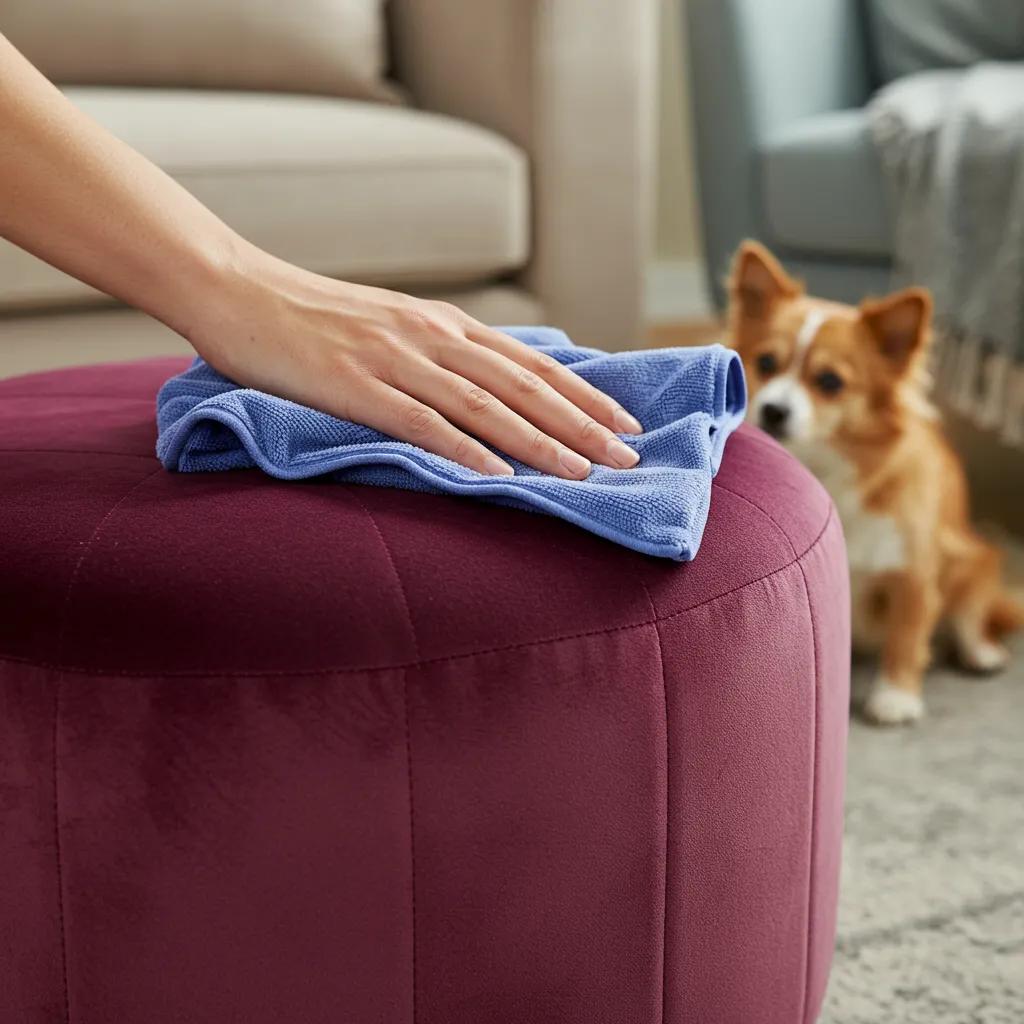
Velvet requires immediate blotting with a clean microfiber to remove excess liquid, followed by a targeted enzymatic spot treatment applied lightly and left to work without aggressive rubbing. After enzymes have reduced the organic content, gently pat the area with dampened cloth to lift residues, then allow the piece to dry in a well-ventilated area; do not apply direct heat which can flatten the pile. Once dry, restore the nap with a soft brush or cloth in the direction of the pile to reinstate the velvet’s texture and sheen. This careful sequence preserves the engineered pile structure and maintains the handcrafted look of high-quality pouffes.
What is the best method to clean pet stains on boucle and eco-leather furniture?
For boucle, start with a low-suction vacuum to remove surface fur and debris, then treat spots with a controlled enzyme application and absorbent pads to prevent over-wetting; loops can snag and distort if fibers are rubbed or saturated. Eco-leather benefits from a pH-balanced cleaner applied sparingly and wiped away, followed by a dedicated conditioner to maintain the coating’s flexibility and prevent cracking; avoid harsh solvents and undiluted vinegar. If stains are deep or odors persist despite careful spot work, professional extraction that protects loops and coatings is often the safest escalation. These tailored methods reduce the risk of structural damage while addressing both visible soil and underlying odor sources.
How Can You Eliminate Pet Odors from Upholstered Furniture?
Odors come from volatile organic compounds and residual proteins that survive surface cleaning; neutralizers work by adsorption, chemical neutralization, or biological digestion of odor molecules. Effective odor removal therefore combines surface cleaning, targeted enzymatic treatment for organics, and odor absorbers for residual volatiles. Start with mechanical removal and enzymatic cleaning, then use absorbers or neutralizers and thorough drying to prevent re-odorization. If DIY steps do not eliminate smell, escalate to professional services that can perform hot water extraction and fabric-safe deodorizers for deep-seated odors.
- Enzymatic neutralizers: Digest organic odor sources; best for urine and fecal odors and essential for long-term odor removal.
- Baking soda / activated charcoal: Adsorb volatile compounds from the surface and cushions; useful for ongoing odor control.
- Commercial fabric deodorizers: Provide temporary scent masking and some neutralization; should be used after cleaning, not before.
These choices clarify which neutralization strategy to apply based on odor origin and fabric type, and they guide when to pursue professional solutions for persistent smell problems.
What are the most effective odor neutralizers for pet smells on couches and benches?
Enzyme-based neutralizers remove odor at a molecular level by breaking down proteins and uric acid, which prevents pets from re-marking treated spots; they are the primary choice for biological odors. Baking soda and activated charcoal act through adsorption and are valuable as secondary treatments—sprinkle or place sachets after cleaning to capture lingering volatiles while the upholstery fully dries. Commercial deodorizers can freshen odors temporarily but are best used in combination with cleaning that removes the source; masking scents alone will not stop reoccurrence. Choosing the right neutralizer depends on whether the odor source is organic, chemical, or environmental, and selecting the correct approach preserves both scent and fabric health.
When should you seek professional upholstery cleaning for persistent pet odors?
Seek professional help when odors persist after multiple enzymatic treatments, when urine has soaked into cushions or frames, or when entire pieces emit a stubborn smell despite surface cleaning. Professionals have deep-extraction equipment and fabric-safe deodorizers that can reach padding and internal structures without compromising bespoke upholstery construction. In markets like Ireland, look for cleaners that offer fabric-specific processes and that respect artisan-built pieces to avoid damaging seams, fillings, or custom finishes. Early professional intervention for certain heavy or repeated contamination prevents long-term fiber degradation and supports the longevity of durable, handcrafted furniture.
What Preventative Measures Protect Your Furniture from Future Pet Stains and Odors?
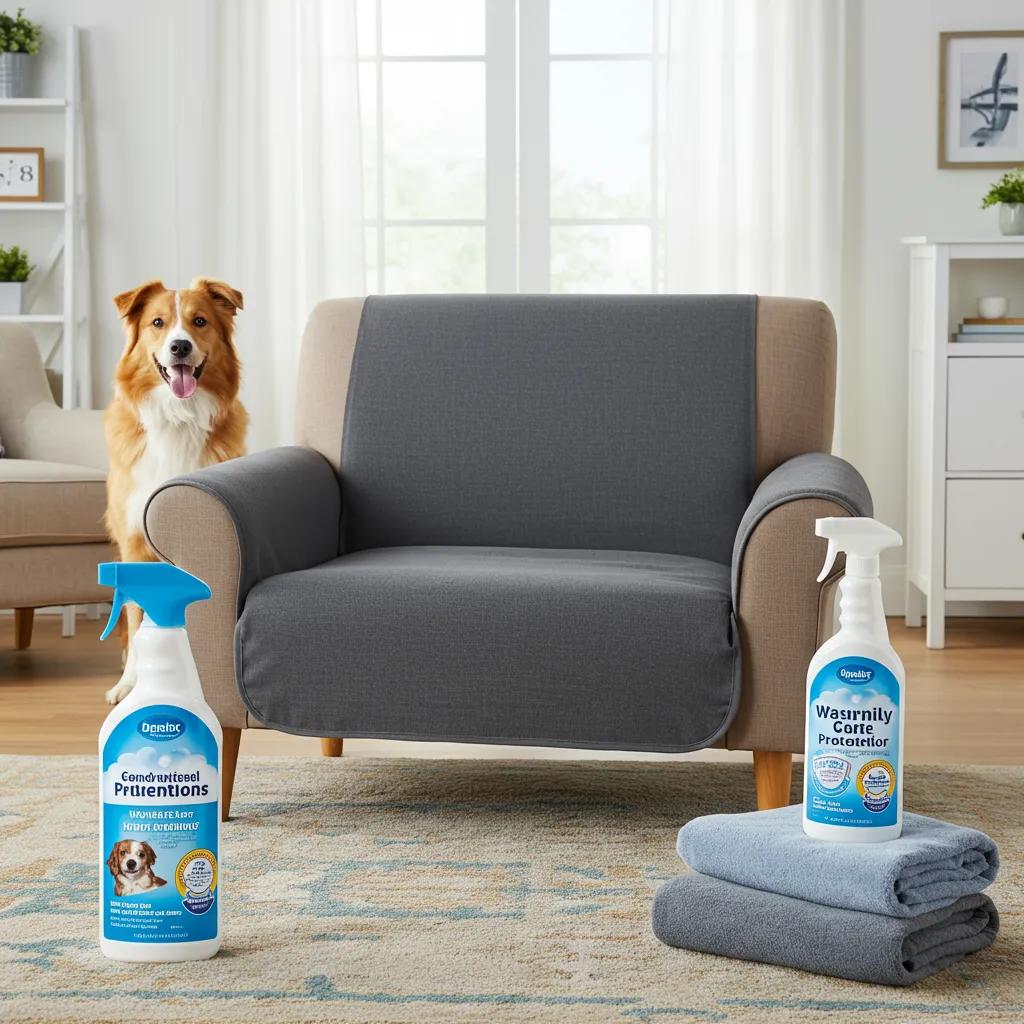
Prevention combines product choices, physical barriers and pet training: selecting durable, pet-friendly fabrics, applying protectors, using removable covers and building routines that reduce accidental soiling. Fabric protectors create a hydrophobic barrier that slows absorption and makes blotting more effective, while washable throws and designated pet bedding keep oils and fur off upholstery surfaces. Training pets to use specific zones and instituting quick cleanup protocols after accidents dramatically reduce the chance of deep contamination. Together, these measures preserve appearance and reduce the need for aggressive chemical treatments that can age fabrics prematurely.
This comparison helps readers choose a layered prevention strategy that balances daily habits, protective products and design choices for pet-friendly living spaces.
How do fabric protectors and sprays help maintain pet-friendly upholstery?
Fabric protectors work by forming a microscopic barrier that reduces liquid absorption into fibers, which lengthens the time available to blot and treat stains before they set; they also reduce soil adhesion, simplifying vacuuming. Reapplication schedules depend on wear and cleaning frequency—most protectors need refreshing after professional cleaning or heavy use. Test protectors on small, inconspicuous areas of velvet, boucle and eco-leather to confirm compatibility, because certain sprays can affect sheen or handle. When used correctly, protectors are a cost-effective layer that reduces stain severity and prolongs the interval between deep cleanings.
What pet training and furniture care habits reduce stain risks?
Consistent routines—designating pet areas, providing washable pet bedding, and immediate blotting of accidents—are the behavioral backbone of stain prevention and odor control. Training pets to use specific spots and offering positive reinforcement reduces repeated soiling risks that degrade padding and fabric over time. Regular maintenance, including vacuuming fur and applying odor absorbers between cleanings, prevents soil buildup that can lock in smells and complicate later removal. Combining training, physical covers and scheduled cleaning creates redundancy that preserves upholstery appearance and extends the life of handcrafted pieces.
How to Maintain and Care for PouffeLOVE’s Handcrafted Upholstered Furniture with Pets?
PouffeLOVE creates handcrafted, stylish, durable and customizable furniture—pouffes, benches, coffee tables and armchairs—so maintenance guidance must align with artisan materials and construction. Provide useful information about handcrafted furniture and lead people to discover, customize, and purchase products. Owners should use gentle, fabric-appropriate cleaners, perform routine vacuuming, and apply protectors after spot testing to keep pieces looking and feeling like new. This brand-aware care section ties practical steps to product decisions, helping owners choose durable fabrics and protective options that match their lifestyle and pet needs.
What cleaning tips preserve the quality of PouffeLOVE velvet and eco-leather furniture?
For PouffeLOVE velvet, vacuum regularly using a soft brush attachment, treat fresh stains promptly with blotting and enzymatic spot cleaners, and restore the nap with a soft brush to maintain texture. For eco-leather finishes, wipe spills quickly with a damp cloth using a pH-balanced cleaner and apply a suitable conditioner occasionally to prevent drying or cracking of the surface coating. Always spot-test any product on an inconspicuous seam before full application, and avoid harsh solvents or abrasive scrubbing that can damage handcrafted seams and bespoke finishes. Following these routines preserves both appearance and structural details of artisan upholstery.
How does proper stain and odor removal extend the life of handcrafted furniture?
Immediate, correct cleaning prevents organic residues from degrading fibers, finishes and internal fillings, which in turn maintains structural integrity and aesthetic value that handcrafted pieces rely upon. Enzymatic and material-specific treatments remove the biochemical causes of odor and staining, avoiding repeated masking that can accelerate replacement cycles. Regular maintenance and preventative measures reduce the need for invasive remediation that can stress seams, adhesives and surface coatings unique to handcrafted items. Investing in correct care pays dividends through extended service life, sustained beauty and reduced long-term cost of ownership.
What Are Common FAQs About Upholstery Pet Stain Removal and Odor Control?
This FAQ section answers frequent user queries in concise, actionable terms to capture common search intents and provide quick, reliable guidance for immediate problems. Each answer defines the issue, explains why it matters, and offers clear next steps so readers can act confidently. The structured Q&A format supports schema optimization and helps users find precise answers for old stains, hydrogen peroxide safety and when to call professionals. Below are targeted responses to two high-value queries.
How do I get old pet stains out of upholstery effectively?
Aged pet stains often require repeated enzymatic treatments combined with careful agitation and extraction; enzymes help reactivate and break down long-set proteins, while repeated blotting and controlled moisture remove loosened residue. Start with an enzymatic cleaner and allow extended dwell time per product guidance, then use absorbent pads and, if possible, a low-moisture extractor to lift contaminants without over-wetting padding. Multiple cycles may be necessary, and if discoloration or odor remains, professional hot water extraction and odor remediation offer the best chance of full restoration. Treating early and using appropriate methods prevents recurring issues and preserves fabric strength.
Can hydrogen peroxide be safely used on all types of upholstered furniture?
Hydrogen peroxide can act as an oxidizer that lightens organic stains, but it risks bleaching dyes and altering fabric finishes, so it is not safe for all upholstery types. Always spot-test in a hidden area and use the lowest effective concentration for the shortest time; avoid on dyed velvet and some eco-leather finishes where oxidation can produce permanent color change. For delicate or custom textiles, enzymatic cleaners are typically safer because they target the organic stain without strong oxidizing action. When in doubt, opt for enzyme-based treatments or consult a professional to avoid irreversible damage.
Provide useful information about handcrafted furniture and lead people to discover, customize, and purchase products.

