
Dining Table Size Guide: How to Choose the Perfect Dimensions, Seating, and Clearance for Your Dining Room
A well-proportioned dining table transforms daily routines and hosting into comfortable, attractive rituals by matching dimensions, seating capacity, and clearance to your room. This guide explains how to measure your dining room space accurately, calculate seating capacity using practical rules of thumb, compare table shapes and standard heights, and plan clearance so guests move freely. You will learn clear measurement steps, how to map table length or diameter to number of seats, and what to allow for chairs, benches and extensions. Practical examples focus on common Irish room sizes and modern living patterns, helping homeowners and small businesses optimise flow and style. Read on for measurement checklists, seating charts, shape comparisons, recommended clearances, extendable-table advice, and a short section on how PouffeLOVE’s handcrafted benches and custom solutions can complement your chosen layout.
How Do You Measure Your Dining Room Space Accurately?
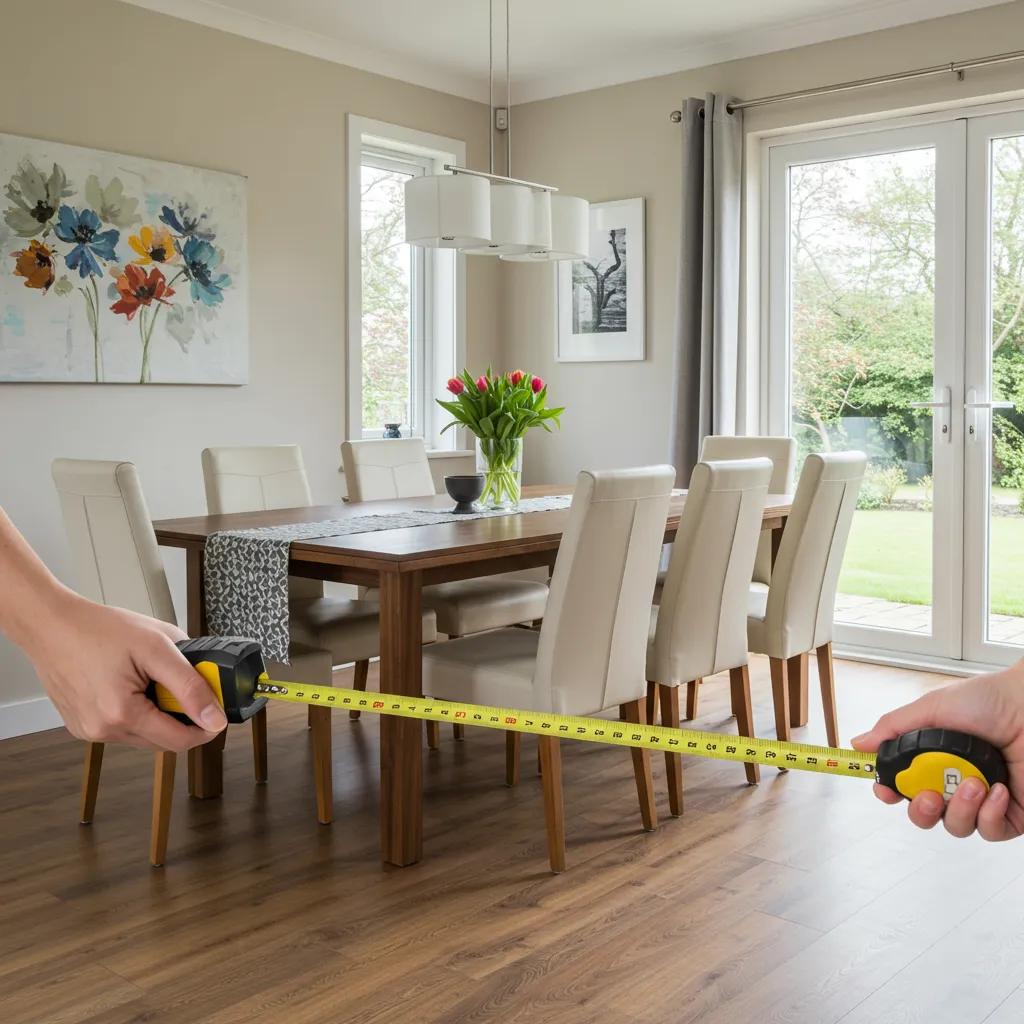
Measuring your dining room space accurately means recording room length and width, noting obstructions, and applying clearance rules to ensure comfortable circulation. This process converts raw room dimensions into a usable footprint for table placement and traffic flow, preventing last-minute surprises when furniture arrives. Accurate measurement starts with a single sweep from wall to wall, then mapping fixed elements such as radiators, door swings and built-in storage. The next paragraphs explain what specific dimensions to capture, how much clearance to provide, and how to account for other furniture when planning placement.
What Are the Essential Room Dimensions to Consider?
Essential room dimensions include overall room length and width, alcoves or jogs in the wall, door and window locations, and the positions of radiators or vents that affect furniture placement. Measure the narrowest usable width as well as ceiling height if you plan tall furniture; note door swing directions so chairs don’t block access. Record these measurements on a simple sketch, marking fixed features and the direction doors open; this annotated plan becomes the basis for deciding table size and orientation. Accurate room notes reduce guesswork when choosing rectangular versus round shapes and help identify whether an extendable table or bench will better suit your space.
How Much Clearance Space Is Needed Around a Dining Table?
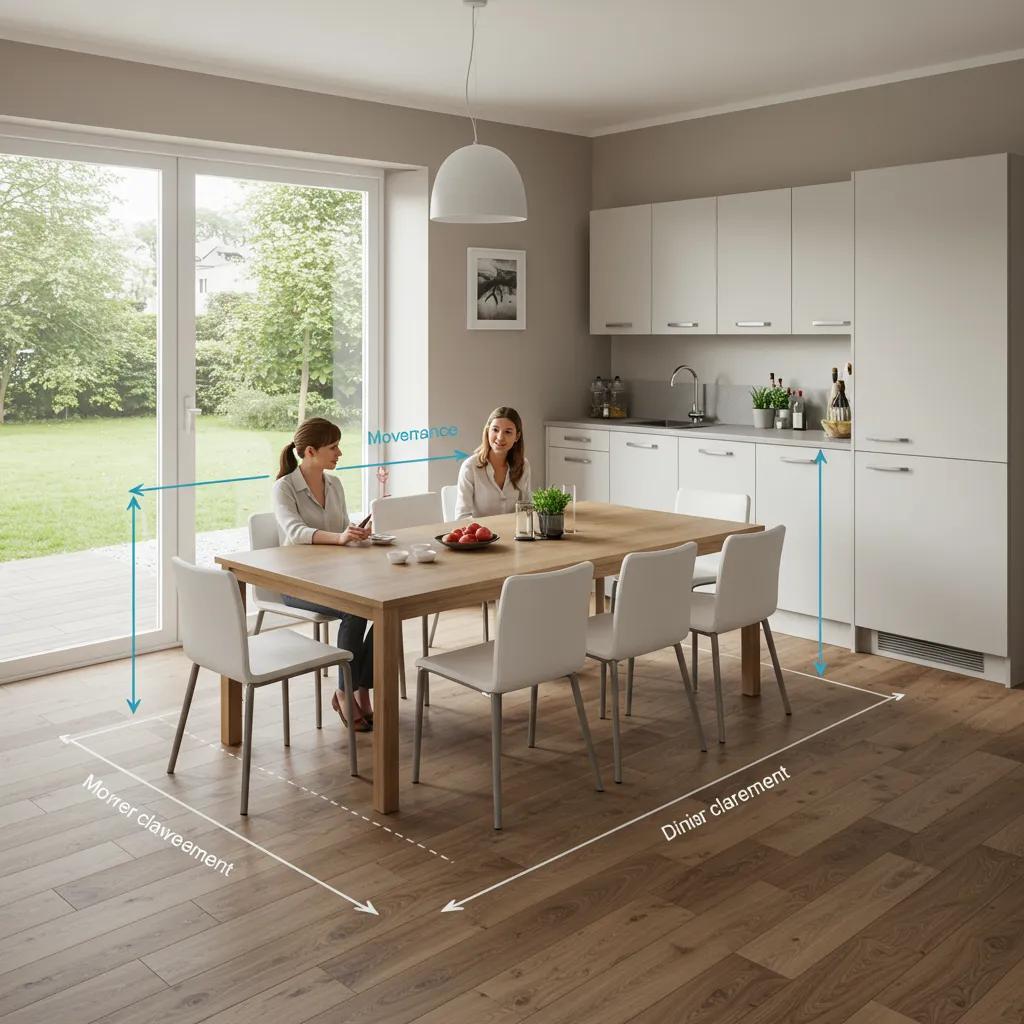
Allowing the right clearance around a dining table ensures chairs can be pulled out and people can pass behind seated diners without squeezing. The practical guideline is 36–48 inches (90–120 cm) from the table edge to walls or large furniture for comfortable movement, while 36 inches (90 cm) is the minimum workable clearance in tighter rooms. Tighter clearances can be managed with benches or armless chairs that tuck in more cleanly, but every reduction increases the risk of restricted movement; plan for the higher end when possible. Proper clearance also protects sight lines and maintains visual balance, which leads into how to reserve space for sideboards and storage next.
The Influence of Dining Space Design on Eating Experiences
Key design elements impacting cooking and eating experiences encompassed spatial dimensions and arrangement, interconnections with adjacent areas, the selection and integration of fixtures and fittings (considering spatial ergonomics, material properties, and texture), and indoor environmental conditions (including illumination, air circulation, visual permeability, and external vistas). A significant number of these elements, such as ensuring adequate dining area capacity, represented common needs across a broad spectrum of residents.
The impacts of kitchen and dining spatial design on cooking and eating experience in residential buildings: a scoping review, A Sal Moslehian, 2023
When other furniture—sideboards, buffets, storage benches or display cabinets—shares the dining zone, prioritise circulation first, then function and storage access. Reserve at least 30 inches (75 cm) between the table edge and storage doors to allow drawers or doors to open and for comfortable access. Consider using multifunctional pieces such as storage benches that pull double-duty as seating to reduce the number of separate units, preserving floor space and improving flow. Planning around these constraints early in the measuring stage helps you choose a table footprint that coexists with existing furniture without compromising movement.
How Do You Calculate Dining Table Seating Capacity?
Seating capacity is a function of usable perimeter and the average space each diner requires; a clear baseline helps translate table dimensions into realistic guest counts. The accepted rule of thumb is roughly 24 inches (60 cm) of linear table edge per seated person for comfortable dining, and slightly less for casual or bench seating. Below we provide a seating capacity chart for common table shapes and lengths, explain the standard space per person, and offer adjustments for everyday use vs special occasions.
Before the EAV table, here are practical lists to guide your seating choices:
- Baseline Measurement: Allow 24 inches (60 cm) per person along the table edge for standard dining comfort.
- Armchair Adjustment: Add 3–6 inches (8–15 cm) per armchair to account for arms and wider frames.
- Bench Rule: Benches provide continuous seating and can reduce per-person edge allowance to about 18–20 inches (45–50 cm) per person for casual settings.
These rules help convert table length or diameter into an estimated seat count; the table below provides concrete EAV (Entity | Attribute | Value) mappings for common shapes.
This seating table demonstrates how length or diameter drives seating capacity; use it with the 24-inch rule to confirm comfort. When you choose benches, remember continuous seating changes the per-person calculation and can increase flexible capacity for casual or family dining.
What Is the Standard Space Per Person at a Dining Table?
The standard per-person width for dining is approximately 24 inches (60 cm), which balances plate, elbow and serving space for comfortable meals. Converting between imperial and metric is straightforward: 24 inches ≈ 60 cm, and doubling that gives space for two neighbours on the same side. Armchairs with arms, high-backed chairs or generous place settings require more width—allow an extra 3–6 inches (8–15 cm) for each such seat. Understanding this per-person baseline makes it easier to preview how many place settings fit before buying a table or planning seating arrangements.
How Does Table Length or Diameter Affect Seating Capacity?
Table length or diameter directly determines how many 24-inch zones fit along the edge; longer rectangular tables can add two seats for each additional 600 mm of length. For round tables, seating increases in steps as diameter grows, with Ø1000 mm fitting four, Ø1350 mm fitting six, and Ø1600 mm fitting eight comfortably. Wider tabletops also affect shoulder room and serving space, so a very wide rectangular table may still feel cramped if place settings are too close across the width. These dimensional relationships help you choose a table that matches both daily use and occasional entertaining needs.
How to Adjust Seating for Everyday Use vs. Special Occasions?
Everyday seating often prioritises compactness and flow, while special occasions prioritise guest capacity and comfort; extendable tables, benches and temporary chairs are the practical solutions to bridge both needs. Use benches or slim armless chairs for daily seating to save space and switch to extra chairs or extensions for guests; keep a storage plan for spare chairs or leaves nearby. For hosting, plan an extra 6–12 inches (15–30 cm) clearance per place for serving and passing dishes to maintain comfort. These adaptive strategies ensure your dining set-up serves routine family meals and occasional larger gatherings without permanent oversizing.
Which Dining Table Shape Is Best for Your Space and Style?
Choosing a table shape depends on room proportions, desired seating arrangements and the visual flow you want to create; each shape has practical trade-offs and aesthetic implications. Rectangular tables suit long narrow rooms and offer efficient seating, round tables optimise flow in compact spaces and encourage conversation, while square and oval shapes balance intimacy and softened corners. The following comparisons outline typical dimensions, advantages and recommended room types, helping you match shape to function and style.
Below is a compact comparison table that maps pros, typical dimensions and best seating arrangements for each shape.
This EAV-style table clarifies how shapes align with room layouts and seating goals; use it when sketching your layout to identify the best geometric match.
What Are the Benefits and Dimensions of Rectangular Dining Tables?
Rectangular tables are defined by length and provide the most straightforward way to increase seating by adding length increments—suitable for narrow or elongated rooms. Common lengths range from about 1200 mm for four people up to 2400 mm for eight, with widths typically between 800–1000 mm for generous serving space. Rectangular shapes pair well with benches along long sides to increase capacity and with central lighting to anchor the table visually. When planning rectangular layouts, align table length with room proportion and ensure clearance at each end for circulation and furniture access.
How Do Round Dining Tables Optimize Space and Seating?
Round tables concentrate seating around a central point, improving sight lines and conversation while fitting into tighter footprints without sharp corners interrupting flow. Typical diameters map to seating counts: approximately Ø1000 mm for four, Ø1350 mm for six, and Ø1600 mm for eight; pedestal or central bases free legroom and ease movement. Round tables are especially effective in square or mildly irregular rooms and when you want a sociable arrangement with equalised reach to shared dishes. Choosing a pedestal base maximises usable leg space and allows chairs or benches to nest closely.
When Should You Choose Square or Oval Dining Tables?
Square tables work best in small, square rooms and create intimate settings ideal for four people; typical sizes run 800–1200 mm per side. Oval tables soften visual corners of narrow rooms and offer more flexibility than strict rectangles, with lengths commonly between 1400–2200 mm to accommodate varying seat counts. Choose square tables for consistent sight lines and symmetry, and oval tables when you want the seating capacity of a rectangular table with gentler circulation. Both shapes can benefit from benches on one side for a relaxed aesthetic and improved flexibility.
How Do Table Shapes Impact Seating Arrangements and Room Flow?
Table shape influences how people move around the table and how furniture aligns with architectural features such as windows and doorways, directly affecting sight lines and comfort. Rectangular tables emphasise linear arrangements and often require runways of clearance along the long axis, while round tables allow more flexible placement and simpler circulation. Consider how the table’s edges interact with pedestrian paths—sharp corners near walkways can impede flow, while rounded or oval profiles improve safety and flow. Balancing shape, base design and chair choice supports both comfort and the desired visual rhythm in the dining area.
What Are the Standard Dining Table Heights and How Do They Affect Seating?
Table height determines appropriate chair pairing, user comfort and legroom; knowing standard ranges simplifies matching seats to tabletops. Standard dining tables typically measure 28–30 inches (71–76 cm) high, counter-height tables sit around 34–36 inches (86–91 cm), and bar-height surfaces are about 40–42 inches (102–107 cm). Each height range pairs with a recommended seat height to maintain a comfortable 10–12 inch (25–30 cm) gap between seat top and underside of the table. The next section provides a reference EAV table that links table heights to ideal chair or stool seat heights and explains legroom expectations.
The table below compares standard table heights with recommended seat heights and legroom values to guide pairing choices.
What Is the Standard Dining Table Height and Ideal Chair Pairing?
The standard dining height is 28–30 inches (71–76 cm), which pairs best with chairs that have a seat height of about 17–19 inches (43–48 cm) to maintain comfortable legroom. This combination produces roughly 10–12 inches (25–30 cm) between seat top and tabletop underside, giving clearance for knees and allowing diners to sit and rise easily. Choose chair styles—slim armless, upholstered or side chairs—based on aesthetics and the amount of shoulder room you want to preserve. Matching seat height to table height is essential for ergonomics and for enabling comfortable long meals.
How Do Counter Height and Bar Height Tables Differ?
Counter-height tables (about 34–36 inches / 86–91 cm) and bar-height tables (about 40–42 inches / 102–107 cm) create different dining experiences: counter heights suit casual kitchens and snack bars, bar heights favour standing or high-stool socialising. Counter stools typically have seat heights of 61–66 cm, while bar stools need 76–81 cm seat height; both must provide footrests and stable bases for comfort. Use counter-height for family breakfast bars and bar-height where you want a deliberately informal or pub-style atmosphere. Choosing between them depends on function, ceiling height and how you intend to use the space.
How Much Legroom Should You Allow Between Seat and Tabletop?
Aim for 10–12 inches (25–30 cm) of vertical clearance between the seat surface and the underside of the table to provide comfortable legroom and movement during dining. For upholstered bench seats or deep-cushioned chairs, allow slightly more clearance to avoid the cushion compressing into the leg space—measure seat height with the cushion compressed to be accurate. Also account for kneeroom depth under the table—about 20–30 cm from edge inward—so diners’ knees don’t hit table aprons or crossbars. Proper vertical and lateral clearance ensures comfortable posture and ease of movement throughout meals.
How Can Extendable Dining Tables Maximize Your Dining Space?
Extendable dining tables offer compact daily footprints with the ability to grow for guests, making them a top choice for variable households and smaller homes. Benefits include flexible seat counts, stored leaves or folding mechanisms that tuck away between uses, and the ability to balance everyday needs with occasional entertaining. Understanding the types of extension mechanisms and how to measure for both closed and fully extended configurations ensures you plan clearance and storage effectively. The following subsections list benefits, common mechanisms, and measurement steps for extendable tables.
What Are the Benefits of Extendable Dining Tables?
Extendable tables provide everyday compactness with the capacity to host larger dinners, reducing the need for permanent oversized furniture in modern living spaces. They are ideal for open-plan apartments and multi-use rooms where floor area must perform several functions; stored leaves and integrated storage reduce the need for separate leaf storage. Extendables also preserve purchase flexibility—choose a base style and tabletop material that suits both compact and expanded states. These practical advantages make extendables a sensible compromise between daily comfort and occasional hospitality.
What Types of Extension Mechanisms Are Available?
Common extension mechanisms include butterfly leaves (folding leaves stored inside the table), removable leaves (added into a gap), and sliding or telescopic systems that pull apart to reveal extra panels. Each type balances ease of use, storage and durability—butterfly leaves are convenient for on-the-spot extensions while removable leaves may require separate storage space. Consider mechanism robustness and alignment quality when choosing an extendable table since poor hardware can reduce lifespan and create uneven surfaces. Knowing these options helps match your preference for convenience versus storage needs.
How Do You Measure for an Extendable Dining Table?
Measure both closed and fully extended lengths, recording width and height for each state, then add clearance around the extended length when planning layout and circulation. For example, note compact length for everyday placement and add the leaf length to get the extended dimension; ensure at least 36 inches clearance on all sides in the extended state. Also check where leaves are stored—internally stored leaves change underside clearance, while externally stored leaves need separate storage planning. Accurate measurement for both states prevents surprises and ensures the extendable table functions well within your room’s circulation patterns.
How Can PouffeLOVE Benches and Custom Solutions Enhance Your Dining Area?
PouffeLOVE provides handcrafted, customisable benches and seating solutions that work as stylish, space-saving complements to dining tables, especially in Irish homes with compact rooms or open-plan living. Their current range includes benches with storage and metal-frame options, pouffes, cushions and modern coffee tables, all of which can be tailored in upholstery materials and colours to suit a dining scheme. Using a bench instead of individual chairs can increase flexible seating capacity and tuck neatly under tabletops, improving circulation and visual continuity. Below we describe relevant features, customisation choices and how to request bespoke seating.
Why Choose PouffeLOVE Benches as Stylish Dining Seating?
PouffeLOVE benches are handcrafted with options for storage compartments and metal frames, offering both practical storage and contemporary aesthetic appeal for dining spaces. A bench along one side of a rectangular table can seat more people than the same length of individual chairs and creates a relaxed, family-friendly vibe. Upholstery choices allow benches to coordinate with dining chairs, cushions and room textiles while storage variants hide table linen or spare cushions to reduce clutter. These attributes make benches a pragmatic solution for optimising seating capacity without sacrificing style.
What Custom Dining Table Frames and Upholstery Options Does PouffeLOVE Offer?
PouffeLOVE’s custom offerings focus on frame styles, metal finishes and upholstery materials in a variety of colours to match bespoke interiors and local tastes. Customers can specify metal-frame styles for a modern look, choose upholstery textures for comfort, and select storage integration when needed to maximise utility in smaller rooms. When considering custom pieces, provide clear measurements and describe the intended use—dining benches for everyday seating require different cushion firmness than occassional-use benches—to ensure the final specification meets functional and aesthetic goals.
How to Request a Custom Dining Table or Seating Solution from PouffeLOVE?
To request a custom bench or seating solution, prepare a concise brief with room measurements (length, width, clearances), preferred materials and a budget range, plus photos or a simple sketch for context. Include details on intended use—everyday dining, occasional hosting or dual-purpose seating with storage—so the maker can recommend frame styles and upholstery choices that meet your needs. PouffeLOVE suggests annotating a photo with table size and clearance notes when enquiring; internal product pages and the bench category are the natural places to view options and plan a bespoke request. This practical submission habit speeds the quoting and design review process with the artisan team.
What Are the Best Practices for Dining Room Layout and Table Clearance?
Effective dining room layout balances comfortable seating, circulation and the relationship between dining and adjacent spaces; follow simple numeric rules and layout templates to achieve functional and attractive results. Prioritise clearance for chair pull-out and passageways, use layout patterns for small and open-plan rooms, and employ visual planning tools to test arrangements before purchase. The following subsections recommend clearance distances, three layout templates for common room sizes, and visual tools to validate your plan.
How Much Space Should You Leave for Comfortable Movement?
Provide at least 36 inches (90 cm) from table edge to walls or large furniture for comfortable movement, and up to 48 inches (120 cm) when the dining area doubles as a primary circulation route. Maintain at least 24–30 inches (60–75 cm) for narrow traffic paths between seating groups and kitchen transitions to prevent bottlenecks. When space is constrained, choose benches or armless chairs to reduce the required clearance while preserving functionality. These numeric guidelines ensure diners can sit, stand and pass behind seated guests without disruption.
How to Arrange Dining Tables and Seating in Small or Open-Plan Rooms?
Use three layout templates to adapt to room size: small apartments (compact round or narrow rectangular with one bench), medium rooms (standard rectangular with mixed chairs and bench), and open-plan zones (zone the dining area with rugs and lighting and use extendable tables). For small rooms, a round table with a pedestal base or a slim rectangular table against a wall plus a bench on one side saves clearance. In open-plan spaces, position dining parallel to sight lines, use low storage benches to define the zone, and select tables that visually coordinate with adjacent furniture to maintain flow.
- Small Room Template: Compact table, bench on one side, minimal side furniture.
- Medium Room Template: Standard rectangular table, bench at one side, buffet aligned to wall.
- Open-Plan Template: Rug-defined area, extendable table, mixed seating for flexibility.
These templates provide practical starting points; adapt them to doorways and circulation patterns specific to your home.
What Visual Tools Can Help Plan Your Dining Room Layout?
Visual planning tools include room-planner apps, scaled printable measurement grids and annotated photos that show proposed table footprints and clearance zones. Use a simple 1:50 or 1:25 scaled sketch to place the table and seating, or photograph the room and overlay approximate table outlines to visualise fit; annotated images also help when requesting custom benches or bespoke upholstery. Many planners allow experimentation with table shapes and extension states so you can compare options before committing. Using these tools reduces uncertainty and supports clearer communication when ordering custom pieces or coordinating with suppliers.
- Measure your room and sketch a to-scale plan before shopping.
- Use the 24-inch per person rule and 36–48 inch clearance guideline to test fit.
- Consider benches with storage for small rooms and extendables for variable needs.
These practices combine measurement discipline with practical choices—by following them you ensure a dining arrangement that fits your lifestyle and room constraints.

