Nurturing Your PouffeLOVE Pieces: Expert Tips for Delicate Fabric Care
Delicate fabrics, with their fine fibres, intricate weaves, or soft naps, truly elevate your space. They require a gentle touch to preserve their exquisite finish, texture, and enduring beauty. Following the right cleaning methods is key to preventing fading, pilling, and fibre breakdown, ensuring your cherished pieces remain stunning for years to come. This guide will unveil why gentle, tested cleaning techniques are so effective – they minimise stress while expertly removing soils and stains – offering practical benefits like a restored appearance and extended furniture life. You’ll discover our best practices, safe tools and products, along with fabric-specific, step-by-step methods for velvet, linen, boucle, and eco-leather. We’ll also help you understand when it’s time to call in a professional cleaner. This article thoughtfully maps each major fabric topic into actionable steps: universal precautions and tools; PouffeLOVE velvet maintenance and troubleshooting; linen spot and deep-clean routines; caring for boucle and eco-leather textures; preventative measures to reduce wear; and guidance for selecting trusted professional services here in Ireland. Throughout, we’ve woven in keywords like velvet upholstery cleaning Ireland, linen cleaning, boucle fabric care guide, and eco-leather furniture maintenance to connect our practical advice with the beautiful purchase and customisation options for our handcrafted furniture. Read on to lovingly protect your delicate upholstery and keep your handcrafted PouffeLOVE pieces performing and looking their absolute best.
Caring for Your Delicate Upholstery: Our Best Practices
Caring for delicate upholstery involves a few simple, golden rules designed to minimise damage by carefully managing abrasion, moisture, and chemical exposure. At the heart of these practices are testing, gentle blotting, soft agitation, and low-temperature drying, all crucial for preserving those precious fibres and finishes. The magic behind these methods lies in limiting harsh friction and strong solvent contact, ensuring dyes stay vibrant and the fabric nap remains beautifully intact. This means longer-lasting colour and texture retention for your cherished pieces. Applying these principles brings the wonderful benefit of fewer repairs and a prolonged visual appeal for your handcrafted furniture, especially for luxurious materials like velvet, linen, and boucle. Below, you’ll find our core routines and precautions to embrace before you begin any spot or maintenance cleaning.
The universal tools and safe products you choose truly influence your cleaning outcomes. Our next section covers our recommended tools and what to avoid to keep your beautiful fabrics safe.
Your Essential Toolkit: Safe Cleaning for Delicate Fabrics
When it comes to safe cleaning tools and products for delicate upholstery, our focus is always on soft contact, a neutral pH, and controlled moisture to lovingly avoid any abrasion or colour loss. Reach for a soft-bristled upholstery brush, a vacuum with a gentle upholstery nozzle and low suction, lint rollers for those surface fibre lifts, and microfibre cloths that absorb beautifully without snagging. Always choose mild, pH-neutral detergents and eco-friendly cleaners that are completely free from harsh bleaching agents or solvents. Please steer clear of enzyme-rich laundry products, bleach, alcohol-based solvents, and high-alkali cleaners, as these chemicals can weaken delicate fibre bonds or dissolve finishes. Always, always patch-test any new product on a hidden area and allow it to dry completely before proceeding, just to confirm compatibility and colourfastness. These careful precautions will prepare you to tackle stains safely, leading you naturally into the step-by-step preparation needed before any cleaning begins.
Getting Ready: Preparing Your Delicate Furniture for a Clean
Preparing your delicate furniture thoughtfully reduces risks by gently removing loose debris, checking those all-important manufacturer tags, and patch-testing any cleaning mixes in hidden areas before full application. Begin by carefully vacuuming seams and crevices with a soft nozzle to lift away any grit, remove loose cushions and zippers where possible, then lovingly inspect care labels and stitching for removable covers or “dry-clean only” instructions. Next, create a mild detergent solution for testing: dilute just one drop of neutral detergent in 250 ml of cool water, dab a microfibre cloth into the mix, and gently blot a hidden seam to observe any colour change or texture response. If your test shows no colour transfer, you can confidently proceed with spot cleaning using gentle blotting motions rather than rubbing. This careful sequence prevents accidental damage during your routine maintenance. Proper preparation truly ensures your subsequent fabric-specific procedures work effectively and safely, giving you peace of mind.
At PouffeLOVE, we champion careful, fabric-specific care for all our handcrafted products. We’re delighted to provide product-care resources and customisation guidance to help you, our valued owners, maintain your upholstery beautifully. We love sharing useful information about our handcrafted furniture and inviting you to discover, customise, and purchase pieces that truly speak to you. This commitment ensures our customers can perfectly match cleaning practices to their chosen fabrics while exploring wonderful options for custom finishes and protective choices.
Velvet Dreams: Expert Care for Your PouffeLOVE Velvet Upholstery
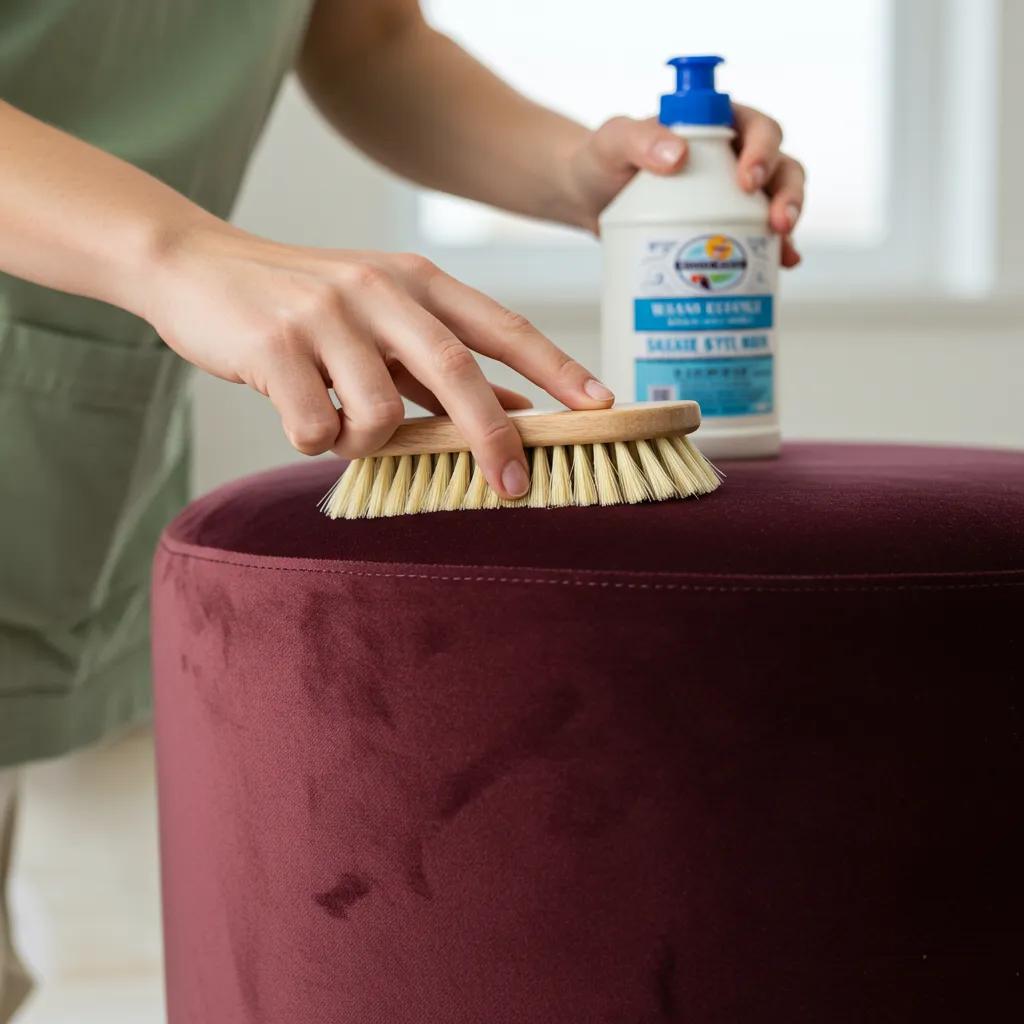
Cleaning velvet upholstery is a delicate dance, balancing gentle soil removal with the loving restoration of its nap to preserve that irresistible softness and visual depth. Our most effective methods involve low-moisture spot cleaning, soft brushing, and careful drying to prevent any matting. The reason these approaches work so beautifully is that velvet’s luxurious pile layers can trap dirt and moisture, so controlled blotting and directional brushing gently lift soils without compressing the fibres, resulting in renewed texture and vibrant colour. Regular maintenance brings wonderful benefits, including a more even nap, fewer crushed areas, and a sustained luxurious appearance on your beloved pouffes, benches, and armchairs. The following step-by-step guide covers immediate spill response, routine maintenance cleaning, and when a deeper clean or professional service might be needed.
Spill happens! Quick action and clear steps are absolutely critical to limit staining. Our next section gives you a clear, ordered procedure to follow.
Your Step-by-Step Guide to Cleaning Velvet Pouffes
For spot cleaning velvet, act quickly and with a gentle touch: blot, dilute, and lift rather than rub, to lovingly avoid crushing the nap and driving stains deeper. First, carefully remove any solids and blot liquids with a clean microfibre cloth. Second, mix a mild detergent solution (just one drop of neutral detergent in 250 ml cool water), apply it with a lightly dampened cloth, and blot from the stain’s edge inward. Third, rinse with a cloth dampened with plain water and blot dry. Fourth, allow your piece to air dry away from direct heat, then gently revive the nap with a soft brush, moving in the direction of the pile. For weekly maintenance, a light vacuum with a soft upholstery nozzle and gentle brushing will keep fibres beautifully aligned. For persistent or set-in stains, consider professional extraction to avoid over-wetting. These actions minimise fibre stress and preserve velvet’s exquisite tactile finish, while also guiding you on when it’s time to consider deeper methods.
Below is a quick, handy comparison of our recommended spot, maintenance, and deep-clean methods for velvet, designed to help you choose the perfect approach.
A quick look at velvet care: methods and when to use them.
This table beautifully clarifies when to use each method, helping you prioritise gentle approaches that truly respect velvet’s luxurious pile and dye stability.
PouffeLOVE offers a stunning range of velvet-upholstered pieces and passionately emphasises fabric care guidance so our customers can preserve those exquisite handcrafted finishes. We love sharing useful information about our handcrafted furniture and inviting you to discover, customise, and purchase pieces that truly speak to you. For those considering our velvet pieces, pairing the right maintenance routine with your customisation choices helps maintain the luxurious look and feel of your cherished purchase.
Keeping Velvet Pristine: Preventing Damage & Preserving Texture
Preventing damage to your beautiful velvet relies on minimising crushing and UV exposure, while also embracing restorative practices when the nap becomes uneven. Gently rotate cushions and pouffes periodically to distribute wear evenly. Avoid placing velvet in direct sunlight, which can cause fading and fibre weakening. Instead, use a soft fabric brush or a handheld steamer at low settings for nap revival, gently lifting compressed fibres. For small crushed patches, steam from a distance and brush in the direction of the pile. Always test a low-heat approach on a hidden area first to confirm colourfastness. These simple, preventative habits maintain velvet’s irresistible tactile and visual qualities, reducing the need for aggressive cleaning or restoration, and naturally leading us into linen-specific care, which has its own unique moisture and stain dynamics.
Linen Love: The Best Way to Care for Your Linen Upholstery
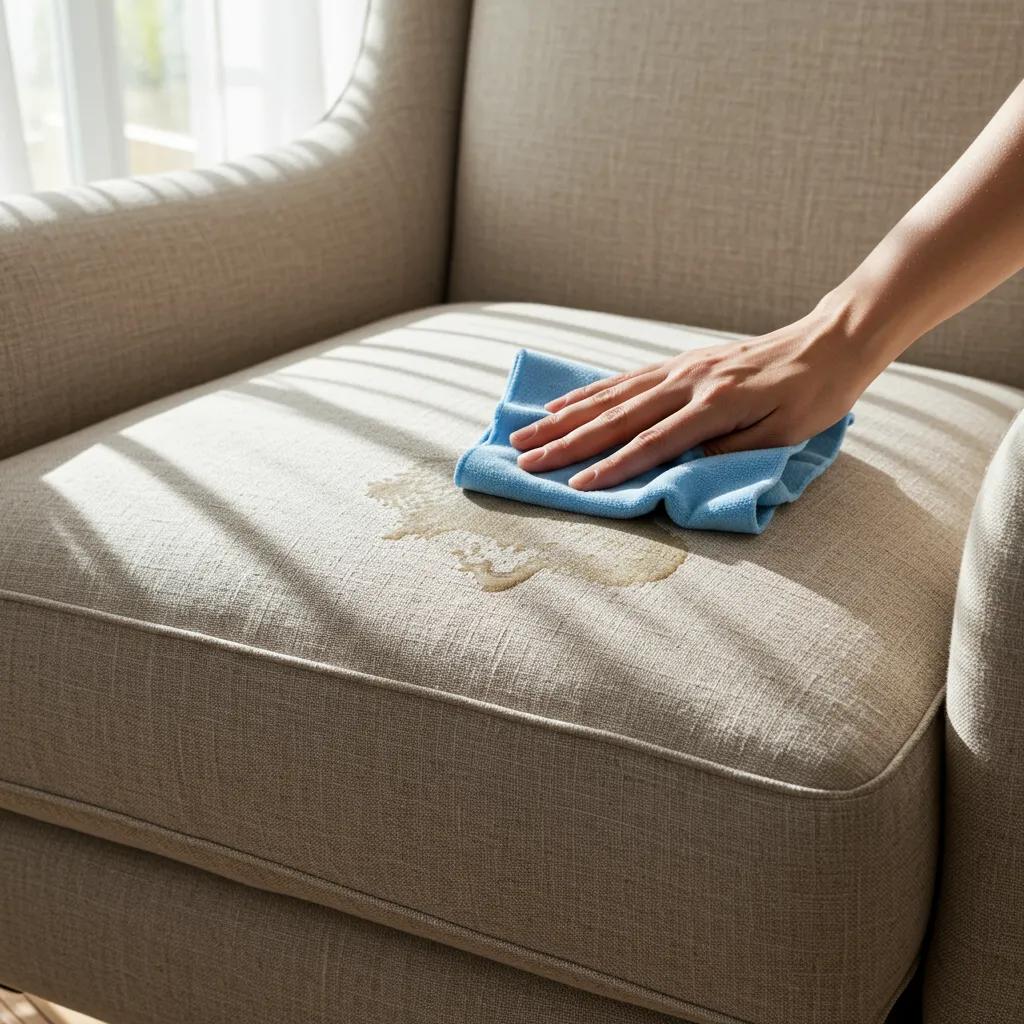
Linen upholstery, with its natural charm, requires approaches that lovingly account for its absorbency and tendency to wrinkle. Linen fibres absorb spills quickly but respond beautifully to gentle blotting and low-heat drying. The secret behind successful linen care is promptly lifting liquids and oils before they set, and always avoiding hot water or harsh agitation that can distort its lovely weave. The wonderful benefit is retained fibre strength, vibrant colour fidelity, and fewer permanent stains. Routine maintenance includes light vacuuming, immediate blotting of spills, and scheduled deep-cleaning for any removable covers. Below, you’ll find our stain-specific spot-cleaning actions and deeper cleaning guidance.
Quick fixes for linen stains are just ahead! Our next section offers stain-by-stain guidance for effective spot removal.
Spotless Linen: Tackling Stains on Your Furniture
Spot-cleaning linen lovingly focuses on lifting stains with minimal wetting to prevent dye migration and fabric distortion. Address stains quickly with targeted solutions for each specific stain type. For water-based stains (like coffee, tea, or wine), gently blot any excess, apply a mild detergent solution (just one drop per 250 ml cool water), dab inward from the edges, then rinse and blot dry. For oil-based stains, first absorb excess oil with cornstarch or baking soda, brush lightly, then use a gentle, solvent-free detergent solution to lift any residue. For protein stains, use cool water only and blot before considering enzyme cleaners, always testing in a hidden area first. Always avoid vigorous rubbing and high temperatures, which can set stains and shrink linen fibres. This gentle method keeps fibres intact and reduces visible residue. Thoughtful testing and cautious action preserve linen’s natural texture and lead us into deep-clean options when soils are more extensive.
Here’s your quick guide to tackling linen stains with confidence.
This table ensures you treat each stain with the right touch, keeping your linen vibrant and beautiful.
Deep Cleaning Your Linen: When & How to Refresh
Deep-clean your linen upholstery on a schedule guided by its use: lightly used pieces every 18–24 months, higher-use items annually, and sooner if covers show soil or odour. For removable covers, machine wash on a gentle cycle with mild detergent in cool to warm water only if the manufacturer tag lovingly permits. Reshape and air-dry flat to avoid excessive wrinkling and shrinkage. For in-situ deep cleaning, opt for low-moisture extraction or professional services that truly understand linen’s shrinkage and weave sensitivity; over-wetting can cause unsightly water rings and distortions. Signs that professional cleaning is needed include persistent odours, set-in stains unresponsive to your spot treatment, or visible fabric weakening. This approach beautifully balances routine home care with professional intervention when linen’s natural characteristics require that specialist handling.
Caring for Your PouffeLOVE Boucle & Eco-Leather Treasures
Boucle and eco-leather demand tailored approaches because boucle’s charming looped texture can trap dirt, while eco-leather behaves like a coated surface that truly benefits from gentle cleaning and conditioning to prevent cracking. The secret to safe care lies in selecting methods that lovingly respect boucle’s unique pile structure and eco-leather’s surface coating: low-suction extraction and a gentle dab-and-lift for boucle; mild soap-and-water cleaning and periodic conditioning for eco-leather. Proper care yields an even, inviting texture for boucle and sustained flexibility plus a uniform appearance for eco-leather, beautifully maintaining the aesthetics of your handcrafted furniture. The following subsections will explain our texture-preserving boucle tactics and safe eco-leather maintenance.
Boucle’s unique loops need a special touch. Let’s dive into how to care for them.
Boucle Bliss: Your Guide to Cleaning This Unique Fabric
Caring for boucle requires cleaning that gently lifts surface debris without flattening its delightful looped surface. A low-suction vacuum with a brush attachment and gentle dabbing are your primary maintenance actions. To treat spots, embrace the dab-and-lift method: mix a mild detergent solution, apply with a lightly dampened cloth to blot the stain from the edges inward, and always avoid vigorous brushing, which can flatten those lovely loops and change the texture. For routine upkeep, gently rotate cushions and lightly brush loops with a soft brush to maintain loft and texture while preventing matting. These steps beautifully preserve boucle’s visual depth and tactile character, reducing the need for aggressive extraction that could damage its unique weave.
Here are a few common boucle care mistakes to steer clear of.
- Using high-suction vacuums: This can compress those beautiful loops and flatten the texture.
- Aggressive scrubbing: This risks breaking the looped yarns and causing permanent pile loss.
- Excessive moisture: Can lead to matting and potential dye migration, dulling its charm.
These cautions truly stress gentle maintenance and lead us beautifully into eco-leather cleaning methods, which use different mechanics.
Eco-Leather Elegance: Safe Cleaning & Maintenance
Eco-leather responds best to mild soap-and-water cleaning, followed by occasional conditioning to preserve its lovely pliability and appearance. Its coated surface repels water beautifully but can dry and crack without gentle, consistent maintenance. For regular cleaning, mix a few drops of neutral soap in warm water, wipe with a soft cloth, rinse with a damp cloth, and dry with another soft towel. Please avoid alcohol-based cleaners and abrasive tools that can strip its finishes. Condition your eco-leather every 6–12 months using a product specially formulated for synthetic leathers, always testing first in an inconspicuous area to confirm compatibility. Watch for early signs of surface cracking or flaking, which indicate the need for conditioning or professional attention. Maintaining surface oils and avoiding harsh solvents keeps your eco-leather supple and wonderfully attractive.
Long-Lasting Beauty: Preventative Care for Your Delicate Upholstery
Preventative measures for delicate upholstery lovingly focus on reducing exposure to stains, UV rays, and uneven wear. This is achieved through protectors, cushion rotation, and careful environmental control, all designed to prolong its beautiful appearance and structural integrity. The mechanism is wonderfully simple: barriers and thoughtful habit changes reduce the frequency and severity of damage, while planned rotation distributes load and slows fibre fatigue, resulting in furniture that lasts longer and looks better. Effective prevention reduces cleaning frequency, lowers the risk of permanent damage, and preserves the cherished resale value for your handcrafted pieces. Our next subsections will compare protector types, discuss rotation practices, and explain why sunlight and harsh chemicals can accelerate fibre degradation.
Wondering how protectors and rotation work their magic? Let’s explore the how-to and when-to.
The Power of Protection: Fabric Protectors & Cushion Rotation
Fabric protectors and rotation work hand-in-hand to spread wear and reduce liquid penetration. Protectors form a repellent barrier, while rotation thoughtfully distributes contact across cushions to avoid concentrated stress. Protector types include spray-applied fluorine-free fabric guards for excellent stain repellency, and topical coatings that resist oil-based soils. Effectiveness varies, and reapplication is often recommended every 6–18 months, depending on use. Embrace a rotation schedule—rotate cushions weekly for high-use seating and monthly for occasional pieces—to even out wear patterns and prevent permanent crush marks. Always reapply protectors after deep cleaning and follow manufacturer recommendations. These simple steps reduce spotting and structural strain, naturally leading us into sunlight and chemical avoidance strategies that protect fibres at a molecular level.
Here’s a quick comparison of protector options to help you choose wisely.
This table helps you make informed choices, ensuring your furniture gets the perfect protection.
Guard Your Treasures: Why Sunlight & Harsh Chemicals Are the Enemy
Sunlight and harsh chemicals can truly damage delicate upholstery by breaking down dyes and weakening fibres through UV-induced photodegradation and solvent-driven stripping. This leads to fading, brittleness, and even adhesive failure in seams. Our preventative actions include thoughtfully positioning furniture away from direct sun, using UV-filtering window coverings, and always choosing gentle, pH-neutral cleaners for routine maintenance to avoid chemical stress. For humidity-sensitive fibres, keep indoor humidity stable to prevent excessive drying or the risk of mould. Balanced environmental control lovingly protects structural integrity and finish. These measures prevent gradual degradation and reduce the need for restorative cleaning or replacement, which leads us into how to identify when professional help is truly necessary.
PouffeLOVE lovingly recommends protectors and rotation practices as part of our comprehensive care guidance, and we invite our customers to explore our customisable upholstery options to perfectly match their usage patterns. We love sharing useful information about our handcrafted furniture and inviting you to discover, customise, and purchase pieces that truly speak to you. These preventative investments extend the lifespan of your handcrafted pieces and beautifully support their long-term appearance.
When to Call in the Experts: Professional Cleaning for Delicate Fabrics
Professional cleaning becomes a necessary step when stains are deeply set, fibres are structurally compromised, or persistent odours and mildew take hold. This is because professionals utilise controlled extraction, low-moisture systems, and fabric-specific chemistry that household methods simply cannot replicate. The decision to escalate is based on risk: set-in protein stains, mildew, water damage, and structural seam or padding issues often respond poorly to DIY methods and truly require specialist intervention to prevent further harm. Hiring a professional brings wonderful benefits such as deeper soil removal, effective odour neutralisation, and minimal shrinkage, all executed by experienced, insured technicians. The subsections below detail the types of stains and damage that truly warrant expert help, and how to select a reliable upholstery cleaner here in Ireland.
What signals it’s time for a pro? Our next section helps you decide.
Beyond DIY: When to Trust Your Furniture to the Professionals
Expert cleaning is highly recommended for set-in protein or oxidised stains, widespread water damage, mildew growth, and structural padding or seam failure. These conditions risk permanent fibre loss or mould proliferation if treated improperly. Set-in tannin and protein stains often require targeted chemical action that must be applied by skilled technicians to avoid dye damage, while mildew demands thorough drying and sanitising to stop spores from spreading. Structural damage—like broken springs, compressed padding, or seam detachment—also needs professional assessment to restore support and maintain your upholstery’s beautiful geometry. Time sensitivity truly matters: delaying treatment of mildew or deep oil stains increases the chance of irreversible deterioration, so act promptly when these signs appear to lovingly protect your investment.
Finding Your Perfect Pro: Choosing an Upholstery Cleaner in Ireland
Selecting a reliable upholstery cleaning service in Ireland means prioritising fabric-specialist experience, transparent processes, and appropriate insurance to lovingly protect your handcrafted furniture during cleaning and restoration. Ask potential providers about their experience with velvet, linen, boucle, and eco-leather. Request clear descriptions of their cleaning methods (low-moisture extraction, fabric-safe detergents), and always confirm their insurance coverage and damage policies before booking. Seek out before-and-after case examples and clear estimates that outline expected drying times and any recommended protector reapplication. Local references and a deep familiarity with fabric care are strong indicators of competence. Choosing a cleaner who truly understands delicate fabrics reduces risk and ensures that restorative work preserves the handcrafted quality and exquisite finish you cherish.
We love sharing useful information about our handcrafted furniture and inviting you to discover, customise, and purchase pieces that truly speak to you. This helps our owners match professional services to their specific fabric choices and maintenance goals. Remember, professional help is a thoughtful extension of careful home care when your fabrics show signs of serious distress.
We love sharing useful information about our handcrafted furniture and inviting you to discover, customise, and purchase pieces that truly speak to you. This article has lovingly presented fabric-specific cleaning strategies, preventative measures, and escalation criteria so you can protect your handcrafted upholstery and make informed choices about its maintenance, customisation, and service.

